

Lathe machines are ubiquitous in industrial setups for drilling, cutting, turning, etc., to shape various components. The core functionality involves clamping the required material and rotating it by a spindle. They can be manual, semi-automated, or fully CNC-automated.
A manual lathe needs a trained operator to position the workpieces and select the cutting tools. Usually, these tools use high-speed steel (HSS) that contains chromium, tungsten, vanadium, and carbon. These lathes are best for symmetrical parts that can easily get clamped in the spindle.
A CNC metal lathe produces components with brilliant dimensional accuracy. It can work with different materials, including metal, wood, and glass. These machines, first designed by the American John T. Parsons in the 1940s, use Computer Numerical Control. G-Code (Geometric code) and M-Code (miscellaneous) programs control the motion and function of a CNC machine, directing the feed rate, spindle speed, etc.
Many CNC and manual lathe cutting tools are similar, using HSS, tungsten carbide, etc. But some are unique, like face drills and polygon turning.
Both machining processes are different in point of cost, accuracy, operating team and time. CNC machining is less time consuming, easy to operate, and expensive compared to Manual machining. While on other side Manual Lathe method required highly skilled & experienced team, time consuming but cheaper comparing to CNC method.
CNC full form is Computer Numerical Control. This auto machine process can be used for shaping all metal, plastic or wood. This is controlled via computer programs. The accurate programming plays an important role for precision components and machined parts.
Compared to Manual Lathe, CNC Lathe offer tight tolerances, complex and custom shapes. For repetitive jobs and exact shapes, the CNC automate process is best. But the CNC Lathe is more expensive than Manual so for small scale it may not suitable. CNC process can handle all types of jobs from smallest to large machined parts with superior finish. CNC machining can be performed for all types of steel and non-ferrous material including nickel alloys and titanium.
Manual Lathe is a traditional and labor-oriented process to shape the material. This method is very time taking and not suitable for complex shapes. Turning, drilling and cutting through Manual Lathe can be done for low budget projects. Small workshop still prefers Manual Lathe for cheaper and affordable machined components. Also, Manual Lathe are easy to maintain and material wasting can be handled by labor which save a lot of cost.
CNC Technology includes
- EDM
- Laser
- Milling
- Press Brake
- Fastening Solutions
Difference between vertical lathe and horizontal lathe
CNC lathes can be vertical or horizontal based on the position of the workpiece and the tools. Horizontal lathes are more common and especially suited to longer workpieces.
However, vertical lathes offer strong clamping due to the gravitational benefit. They are better for heavy components in aerospace and occupy less floor space.
Advantages
- Much cheaper than CNC counterparts
- Don’t need much maintenance (CNC lathes may wear out if mishandled and under-lubricated.)
- No environmental repercussion (The cutting fluids and coolants for high-speed CNC lathes generate smoke and malodor that impacts skin and respiratory health. It necessitates personnel protective equipment.)
For which application should you prefer a CNC lathe?
CNC lathes can create round components with specified diameters (outer, inner) or other designs by including X and Y axes and additional turrets or spindles. Experts recommend them for fast, consistent production with low lead times. They can perform metal spinning, wood turning, and thermal spraying.
- Aircraft landing gear and fuel access panels
- Automotive dashboard panels
- Oil & gas sectors, for pistons, cylinders, etc.
- Medical/surgical tools and implants
- Electronics
- Textile
- Shipbuilding
Precision and accuracy comparison between CNC lathe and manual lathe
Accurately built components are close to the accepted dimensions. Between a manual and CNC lathe, the latter has higher accuracy (up to 0.0004”). Since identical products follow equivalent instructions and cutting paths, the precision or repeatability is high at 0.0000008”. Precision depicts the similarity between products with the same measurements. Manual lathes can deliver accuracy and precision with significant time and attention.
| CNC lathe | Manual lathe | |
|---|---|---|
| Probability of error | Low due to automation | High due to human error |
| Operators | Less | More |
| Intricate parts | Ideal for tight tolerance products | Not recommended |
| Wastage | Low | High due to higher inaccuracy |
| Monitoring | Less | More |
| Woodworking | Not as optimal | Flexibility and feedback |
CNC lathe operators should be familiar with G-code, M-code, and workflow. Usually, these lathes process one program while the subsequent one is getting ready, saving production time. Their initial cost is higher, but operational costs are lower due to efficiency, speeds, and less personnel. Even so, manual lathes get preferred for woodworking, smaller DIY projects, and specialty components.
The ultimate choice depends on your budget, production volumes and lead times, and desired accuracy and precision.
There are many of Axis comes in Milling Machine for cutting in multiple directions such as 3, 4, 5, 7, 9, and 12 Axis CNC Milling. Check the following table for details
| CNC Milling | Capability |
|---|---|
| 3-Axis CNC |
|
| 4-Axis CNC |
|
| 5-Axis CNC |
|
| 7-Axis CNC |
|
| 9-Axis CNC |
|
| 12-Axis CNC |
|
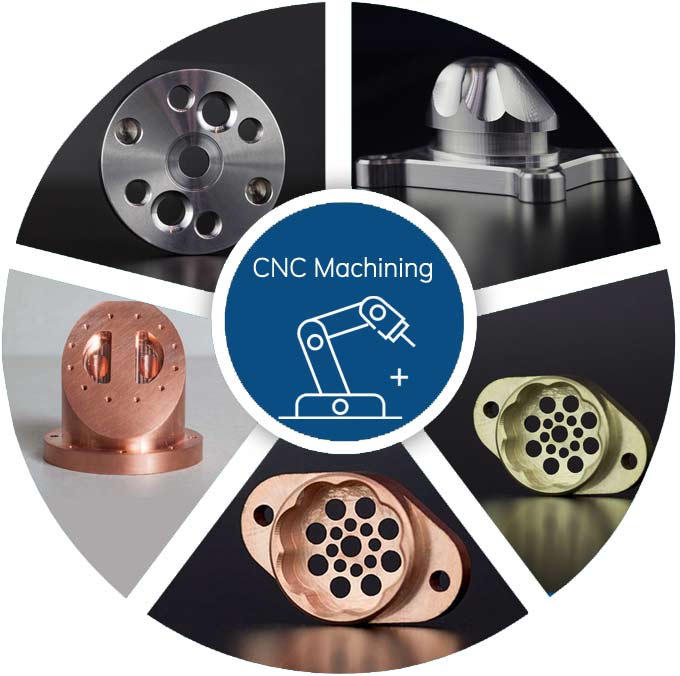
Most Common materials of CNC Machined and Milling Parts
| Material |
Finish |
|---|---|
| Aluminium |
|
| Stainless Steel Grades:
|
|
| Alloy Steel & Carbon Steel |
|
| Brass (360 Brass) |
|
| Copper (Copper 101 and 110) |
|
| Bronze (932 Bearing Bronze) |
|
Blog written by: Aditya
- 2Cr17Ni2Nb vs AISI 431
- Steel Pipes Tubes Buyers in Oman
- Steel Importers In South Africa
- Stainless Steel Importers in Saudi Arabia
- Difference Between 316L And 317L Stainless Steel
- Demand of Steel in the United States of America
- Top 25 Countries Import Steel From India
- How Copper Is Made?
- Top 9 Advantages Of Hastelloy C276 Material
- Are TS Tube And HSS The Same?
- Best Corrosion Resistant Metals For Chlorine That Don’t Rust
- CNC Lathe Vs Manual Lathe
- Difference Between 3-Axis 4-Axis And 5-Axis CNC Mill
- CNC Milling Vs CNC Turning
- Alloy Vs Aluminum
- Density of steel
- Russia and Ukraine war impact on steel industry
- Indian hot rolled products
- Nickel alloy demand
- Steel demand in UAE
- 7 major differences between Chinese Steel and Indian Steel
- Opportunity for steel manufacturers and suppliers in Turkey
- Get FIFA world cup tickets 2022, Qatar for Free
